We are so grateful that Sandy served as Head Scientific Advisor for USA & Canada!
If neither nature, nor science, nor technology is constrained by single disciplines, why is science education still compartmentalized?
Sandy Simon, Ph.D.
Lab Head, Cellular biophysics, The Rockefeller university, NYC

Gone are the days of silos. STE(A)M is interconnected, international, and interdisciplinary, and there is no going back. But course requirements are often siloed, and it’s not easy to ensure these requirements are met in an interdisciplinary pathway.
We are the only learning designers who embed all the rigorous content required by traditional secondary and Community College/Polytechnic schools within a completely new lifelong-learning architecture driven by current global contexts that cross-cut a variety of STEM disciplines—all within the same amount of time as conventional courses.

ENGINEERED TO EASE TRANSITIONS
EXPERTS BELIEVE IN OUR APPROACH
Since 2000 we have collaborated with STEM researchers, master educators, university professors, local and national policymakers, and classroom teachers in a cycle of ongoing improvement. “This is amazing–why aren’t more schools doing this program?” they ask. Jay McTighe, co-author of the Understanding by Design series, comments: “The EduChange science curriculum is conceptually sound, authentically rigorous and genuinely engaging. In fact, I think the term ‘elegant’ is in order! My commendation to you and your team for developing this rich curriculum.”
I think I have really improved in critical reading and writing for science.
Student Voice, 2016
I feel that I have a thorough backbone for science, I can understand well all the topics we have covered, and feel confident going into IB.
Student Voice, 2016
Having a significant amount of experience in laboratory procedures will help us in future science classes.
Student Voice, 2016
I like how the labs make connections to the bigger picture. I like how we know how this skill/concept relates to real-world scenarios.
Student Voice, 2016
I am proud of how I am able to use a variety of skills I learned in this class to design my own lab.
Student Voice, 2016
I am proud of my new confidence in learning.
Student Voice, 2016
I sincerely think that I was very ignorant in joining calculations with concepts, hence I could do it better now.
Student Voice, 2016
Thanks to Integrated Science, I've come to realize how to formally write--which is ironic, because most people learn that in English.
Student Voice, 2016
I am most proud of my advancement in the ability to critically answer questions and overall have way better responses and thinking in science.
Student Voice, 2016
I am now able to get a lot more work done in shorter amounts of time than when I first started this course.
Student Voice, 2016
17+ YEARS OF IMPLEMENTATION & ITERATION


RIGOR increases gradually to REDUCE anxiety
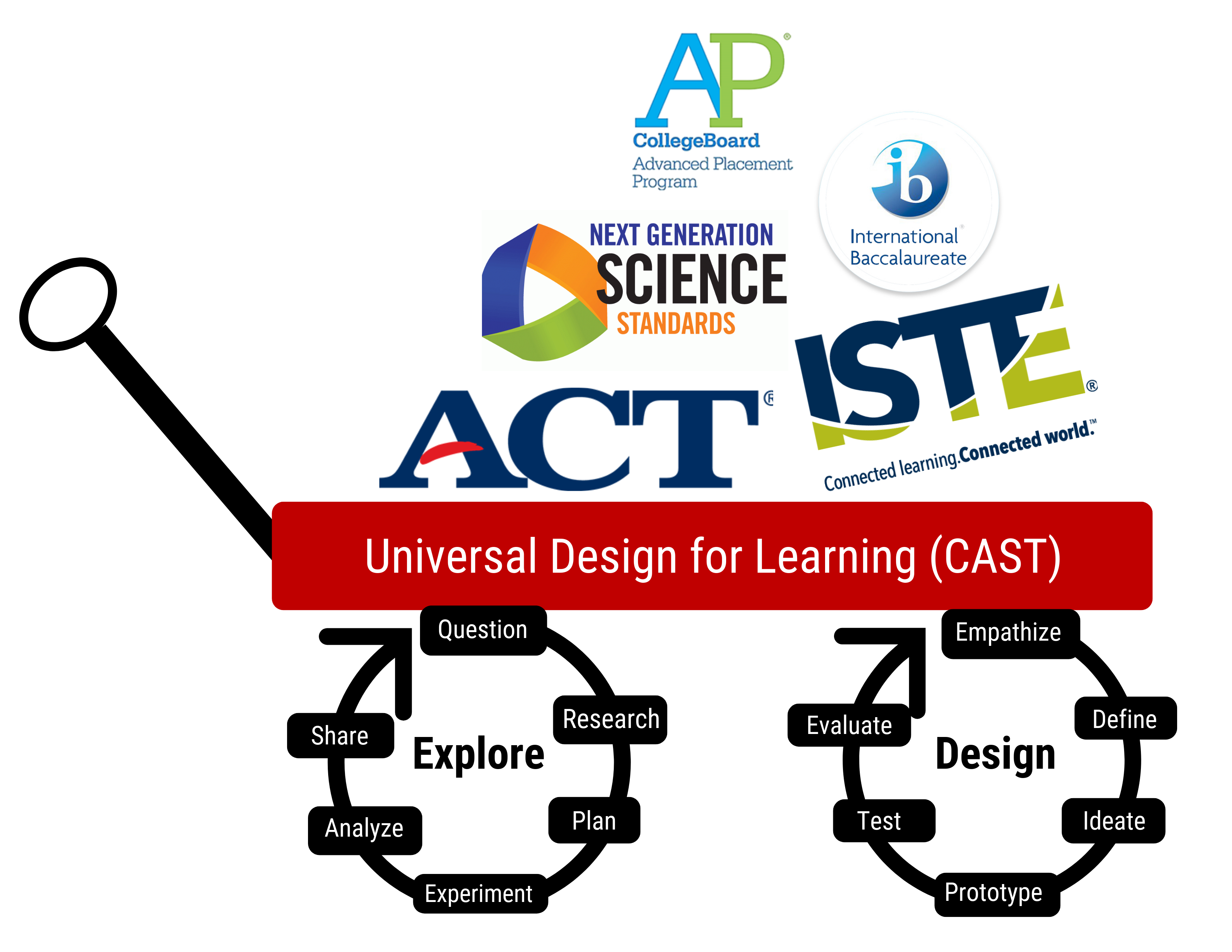
The pressure of national and program-based exams heightens teacher & learner anxiety, but sometimes parents demand these offerings. If you prepare students for those exams, a STEM+ Pathway is the the perfect non-test-prep precursor to AP, IB/DP and other test-prep courses. And those who know the IB program quickly see how this program is a great fit for MYP.
One high school principal comments that it “is very strong in terms of content and intellectual rigor, in terms of asking kids to make choices and decisions in collecting and evaluating data. They’re really figuring things out.”
Authentic rigor is not about memorization devoid of understanding, nor does it need to increase anxiety and stress. Our intentional, coherent multi-year design supports the right kind of rigor, supported by the Sciences of Learning and Development (SoLD).
Special NGSS Information
NGSS is more difficult for teachers to employ than previous sets of standards. And high school teachers have AP, IB/DP & graduation requirements to meet as well. We’ve been creating 3D designs that leverage STEM practices and cross-cutting concepts at the high school level long before NGSS existed. Actually, our designs are 4D.
See below for prepared a cover letter and sample NGSS alignments for 3 of our 35+ units of study.
STUDENT-DESIGNED PROJECTS: FROM PLANNING TO PUBLICATION
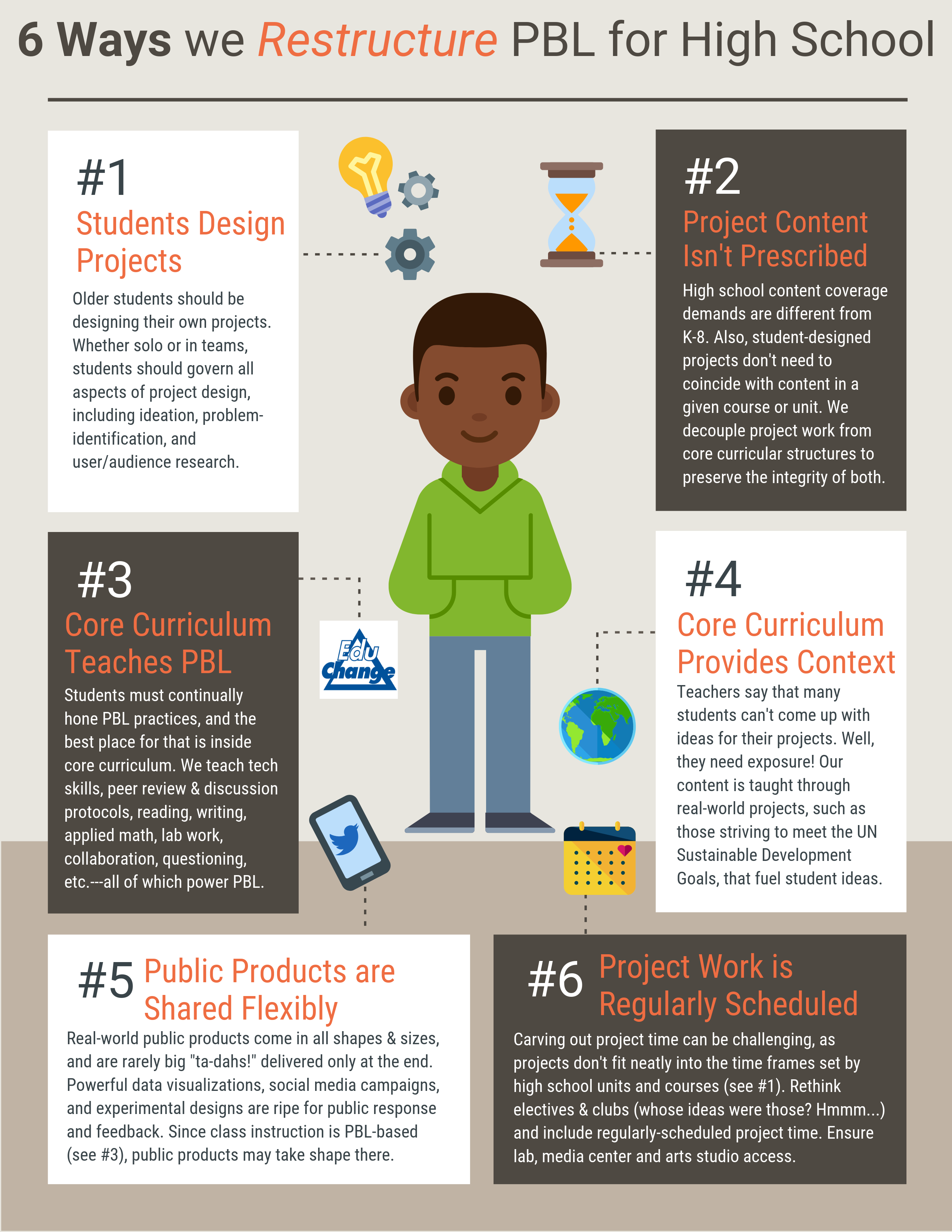
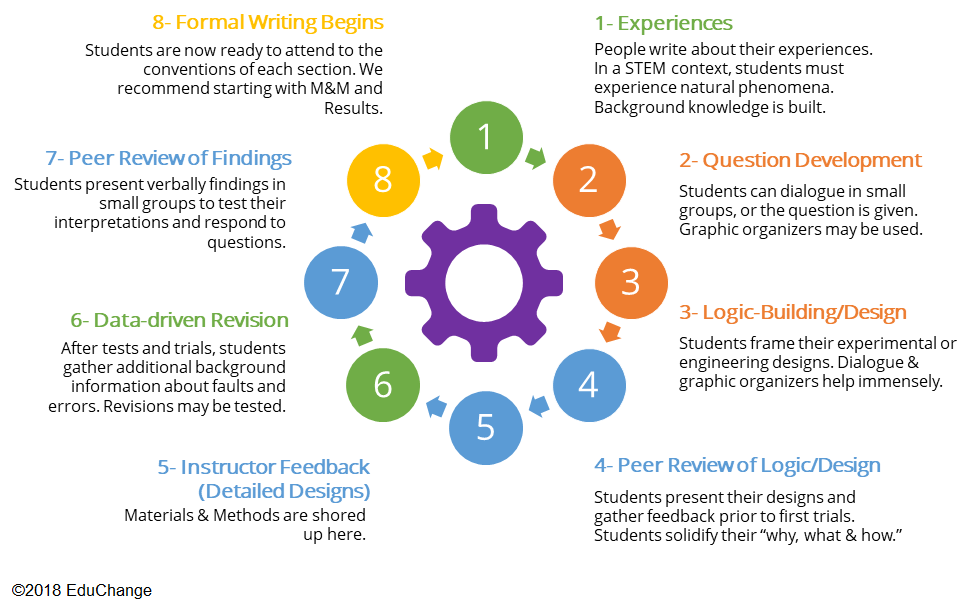
The Integrated Science Program favors the principles and premises of Project-based and Problem-based learning. Classroom instruction & assessment prepares students in the collaborative, research, questioning, communication, design and analytical skills they need to design their own projects. All the Science & Engineering Practices wrapped up in a long-term, authentic experience!
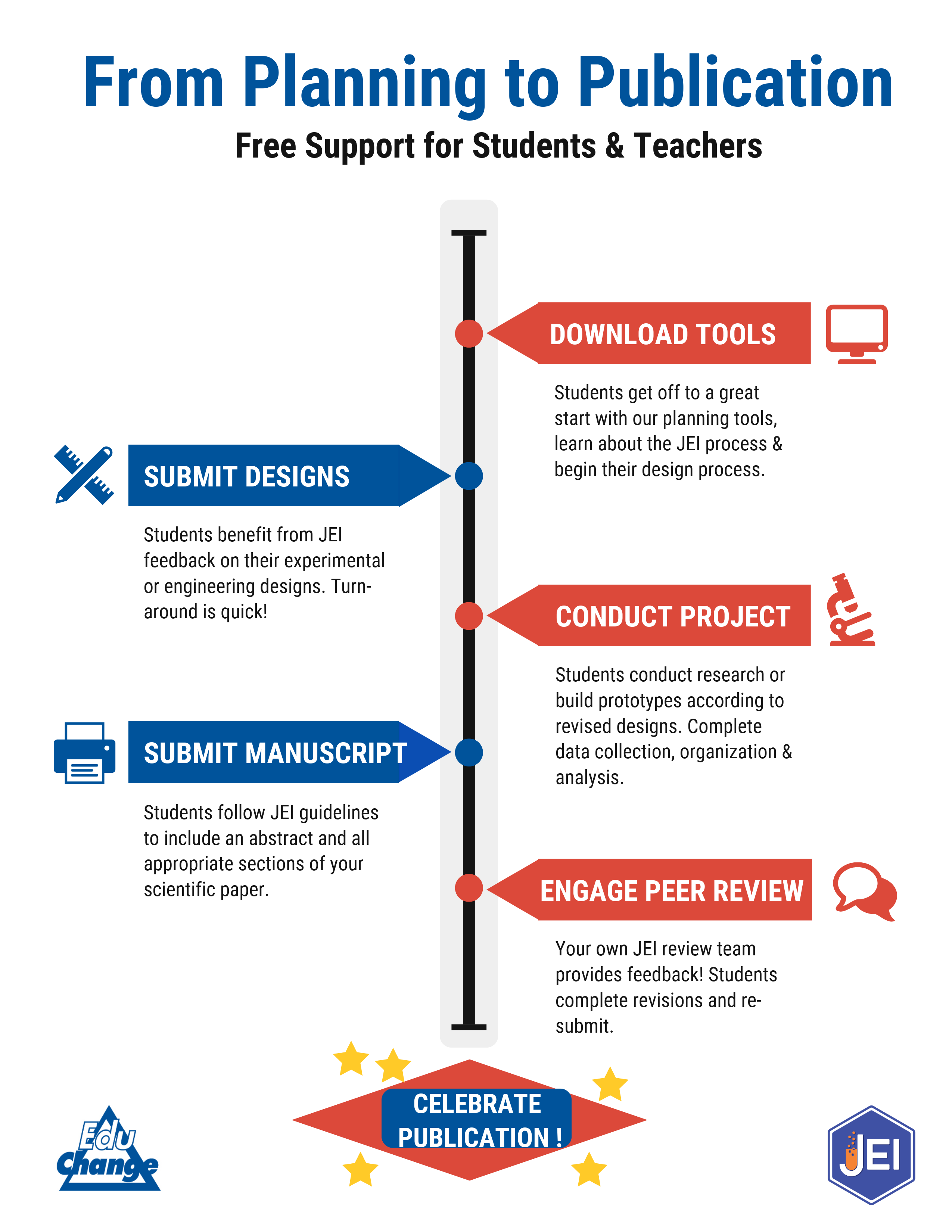
We partner with The Journal of Emerging Investigators (JEI) to give students an authentic capstone experience whenever they are ready. JEI runs an online, scientifically peer-reviewed journal designed specifically for middle and high school students. They accept manuscripts from every STEM discipline, and students can engage in peer review with Ph.D. candidates at TWO different points in the process: once during their design process, and again after they submit their manuscript. Click each image below to look closely.